Antibody Discovery
Computational support across antibody discovery, from lead refinement to candidate generation.
ExploreAntibody Discovery
Customised research and development across antibody engineering.
Several methods, chosen for the question.
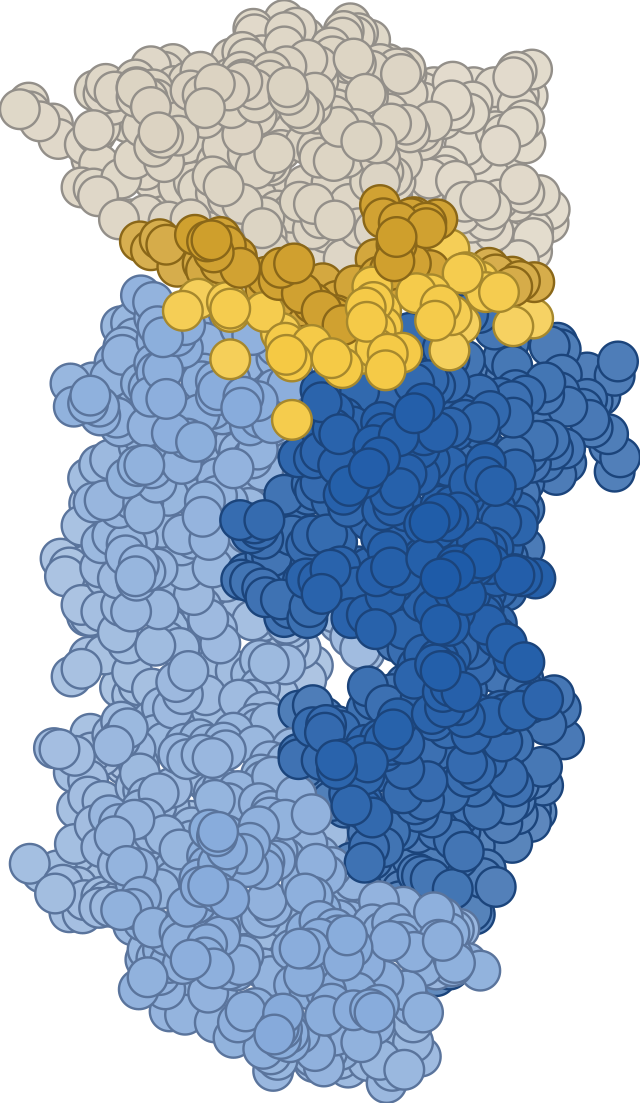
A real antibody–lysozyme complex with the residues at its interface in gold, computed from the deposited coordinates: the kind of question a programme starts from, which region matters. A worked example, not a project result. PDB 3HFM.
Research strategies built around your targets, formats, and development challenges, from early concept through characterisation and optimisation.
Hard problems rarely fit one service; the strategy that connects the methods matters most.
A programme draws on the services below, in whatever combination answers the question. Open one to see what it takes in and what it returns.
Computational support across antibody discovery, from lead refinement to candidate generation.
ExploreAntibody Discovery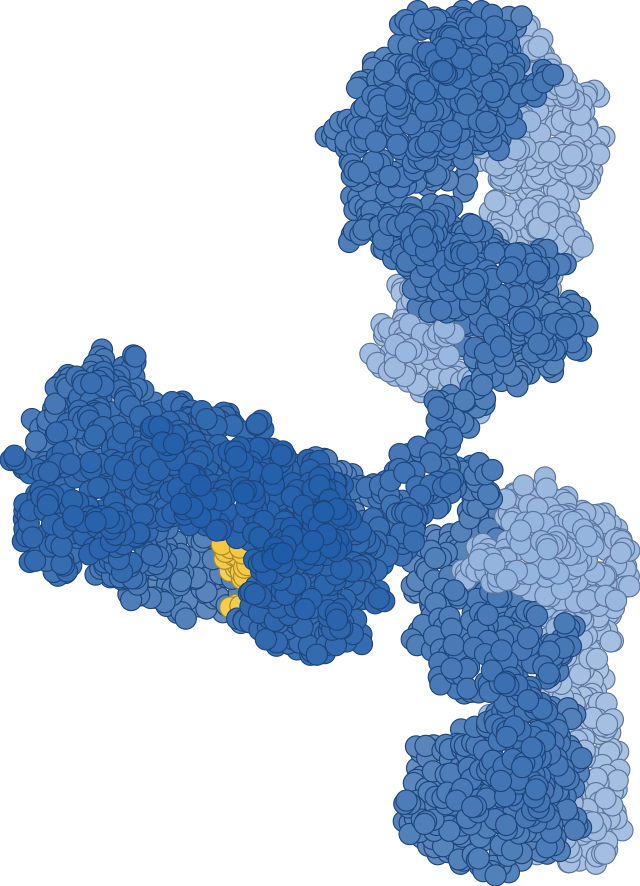
Sequence to structure to interaction: a staged workflow.
ExploreStructural Analysis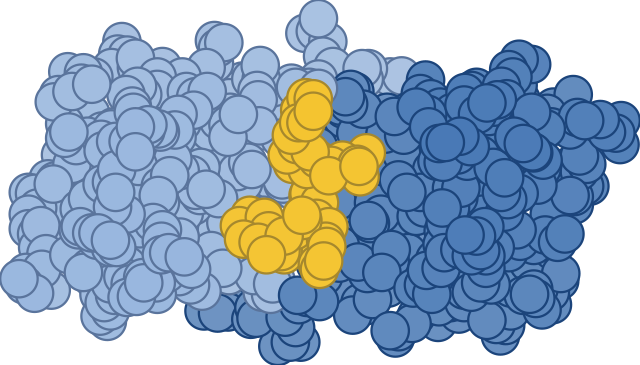
Candidate binding poses and interface maps, ranked and explained.
ExploreMolecular Docking
From static poses to dynamic behaviour.
ExploreMolecular Dynamics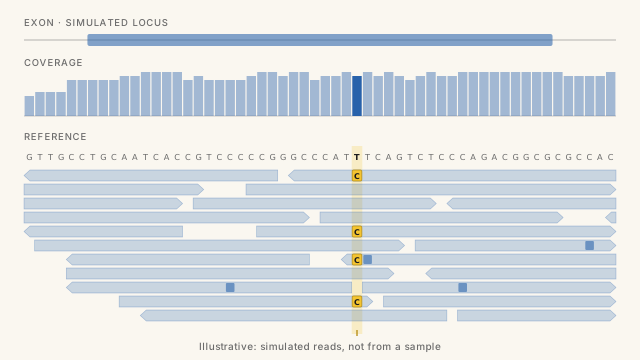
Whole exome sequencing analysis: raw FASTQ to an annotated variant report, for research use.
ExploreGenomics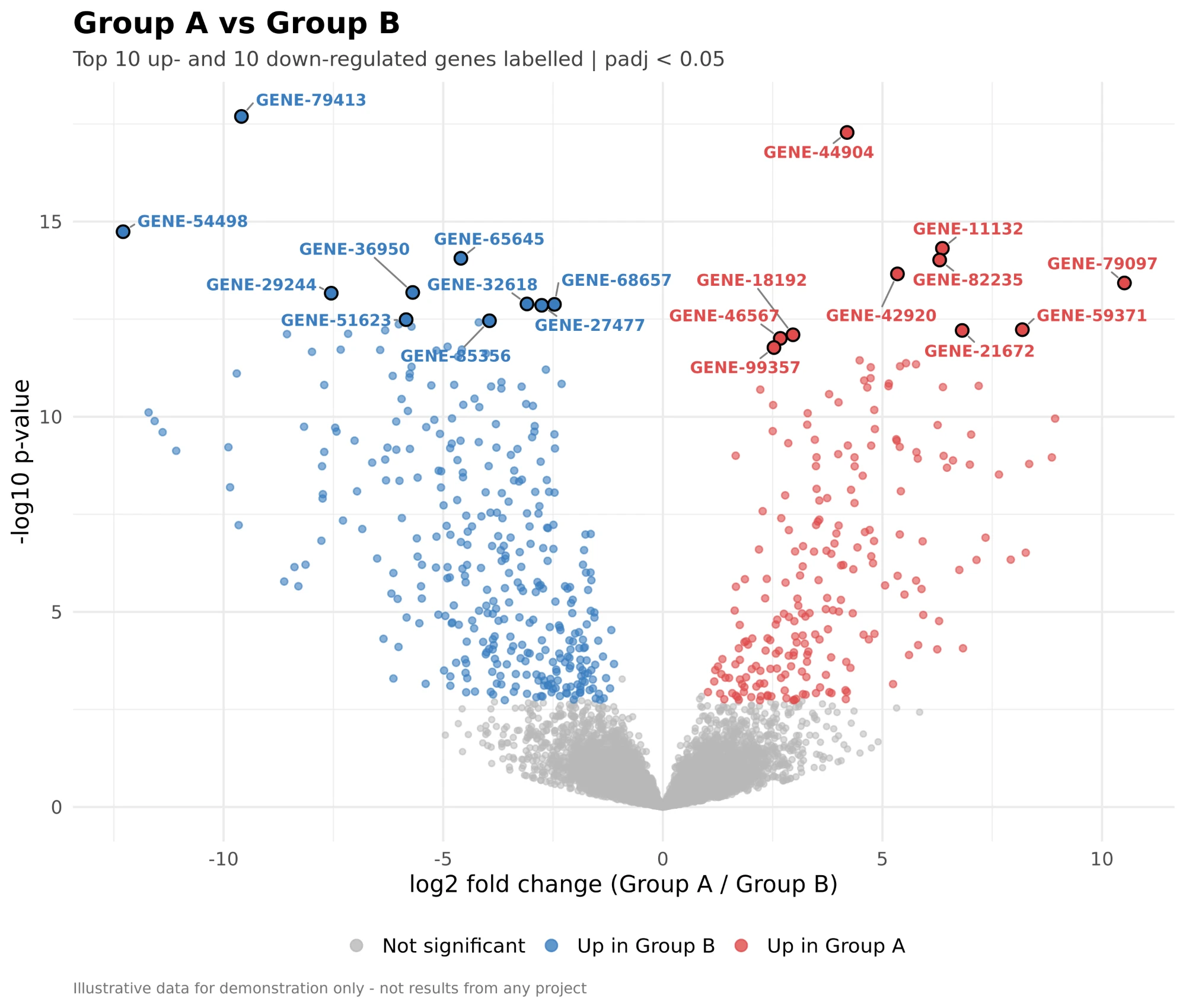
Bulk RNA-seq in. Candidate biomarkers, the pathways behind them and a reproducible report out, for research use.
ExploreBiomarker DiscoveryIllustrative renders, not outputs from an actual run.
Target, format, and constraints.
Which methods answer the question.
Design, analyse, refine.
Computational assessment of candidates.
Evidence, gaps, next steps.
Target, structures, sequences, or data, whatever you already have.
We agree what decision the analysis needs to inform.
Results, figures, and a report stating what they do and don't show.
Computational and advisory work. IndiskaAI does not run wet-lab experiments: characterisation here means computational assessment, and every output is evidence for experimental follow-up rather than a result in its own right. Where a programme is really one candidate decision rather than an open research question, Product Development and Automation Services is the better starting point.
A research strategy that connects the right computational methods to your target, format, and development challenge.