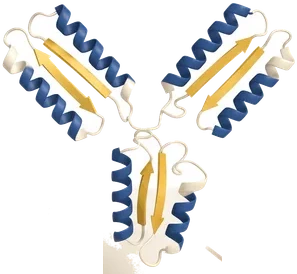
Single Lead
One sequence
Variants of one lead are proposed and ordered for follow-up.
ExploreSingle Lead
Computational support across antibody discovery, from lead refinement to candidate generation.
Pick the card.
Variants of one lead are proposed and ordered for follow-up.
ExploreSingle Lead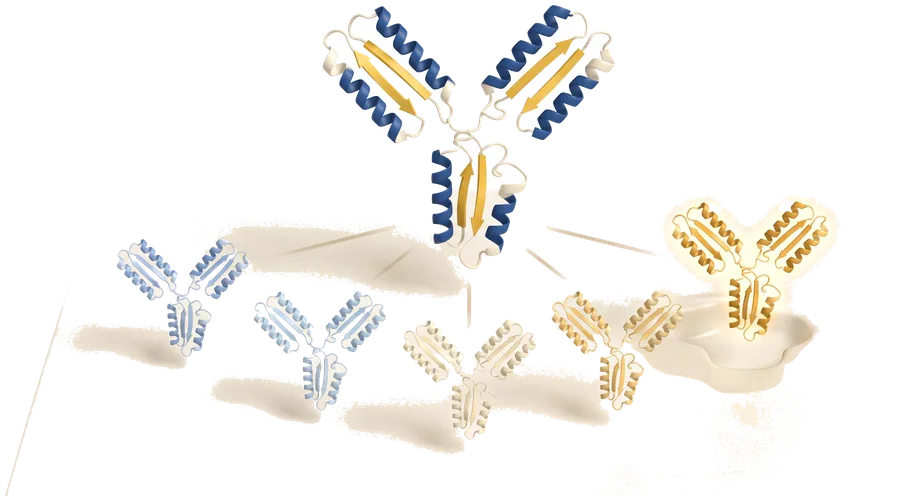
Compare and prioritise across leads using the data you supply.
ExploreLead Optimization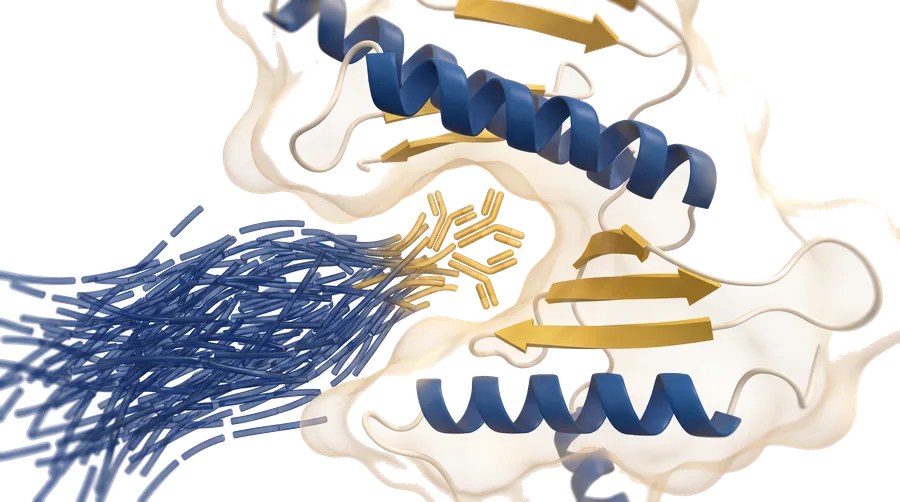
Sequences are translated, grouped and counted, and returned as frequency tables and exports.
ExploreNGS Data Analysis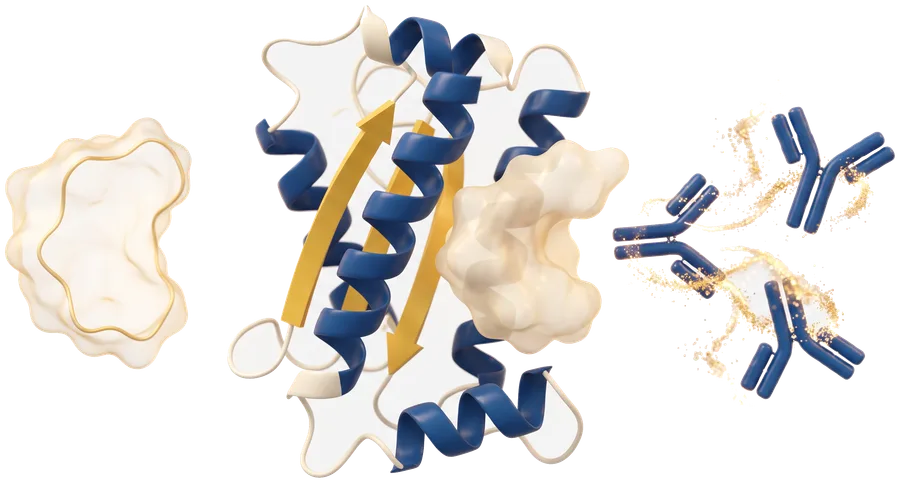
Candidate sequences are generated against a region you specify. They are not confirmed binders.
ExploreDe Novo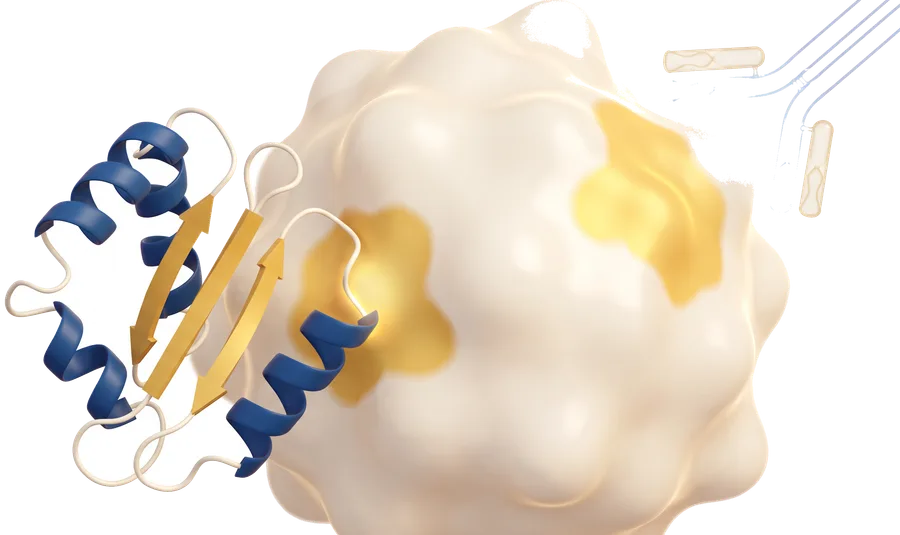
Surface regions of the antigen are computationally proposed. They are not confirmed epitopes.
ExploreEpitope IdentificationIllustrative renders, not outputs from an actual run.
The reference row is the real CDR-H3 of a deposited antibody, PDB 1IGT. The other rows are illustrative design proposals. Tinted columns are where the set varies.
Start from sequences you already have and see where they vary.
Sequence-level descriptors narrow the set before any experiment.
Shortlisted candidates can be examined against the antigen where a structure or model is available.
A short list moves to experimental testing, carried out by your team.
Two heavy chains (navy) and two light chains (pale blue) form each antibody. Discovery works on the variable ends of both arms; everything downstream depends on getting those right.
Computational analysis and design workflows for antibody research. The route is chosen to match the starting material you already have, and every output is a computational result for your team to test.
Target, structures, sequences, or data, whatever you already have.
We agree what decision the analysis needs to inform.
Results, figures, and a report stating what they do and don't show.
These are the computational entry points we accept. Experimental testing is carried out by your team or your partners.
AI-assisted computational workflows designed to explore, prioritise, and refine antibody candidates from your available starting data.